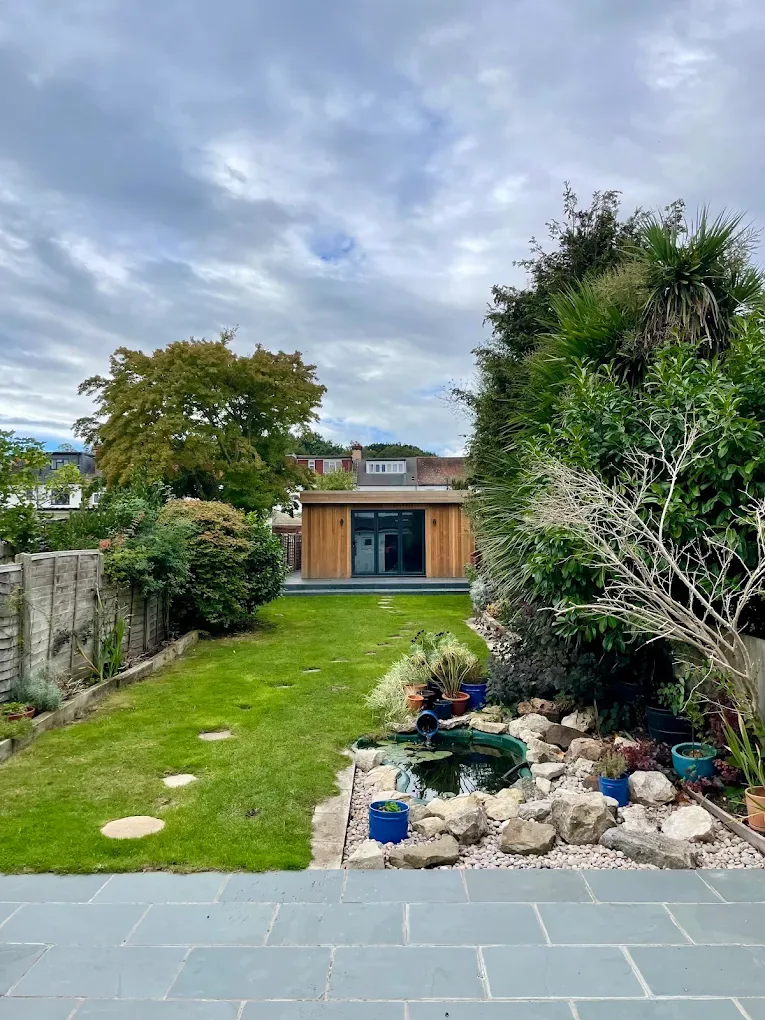
Do you need planning permission for a garden room?
Usually not. Here is how the rules work in London: what you can build without an application, when you do need one, and where building regulations come in.
Most garden rooms are permitted development
Permitted development rights let you build an outbuilding without applying to the council, as long as it stays within a set of national size and position limits. Most of the garden offices, garden rooms and studios we build fall inside them.
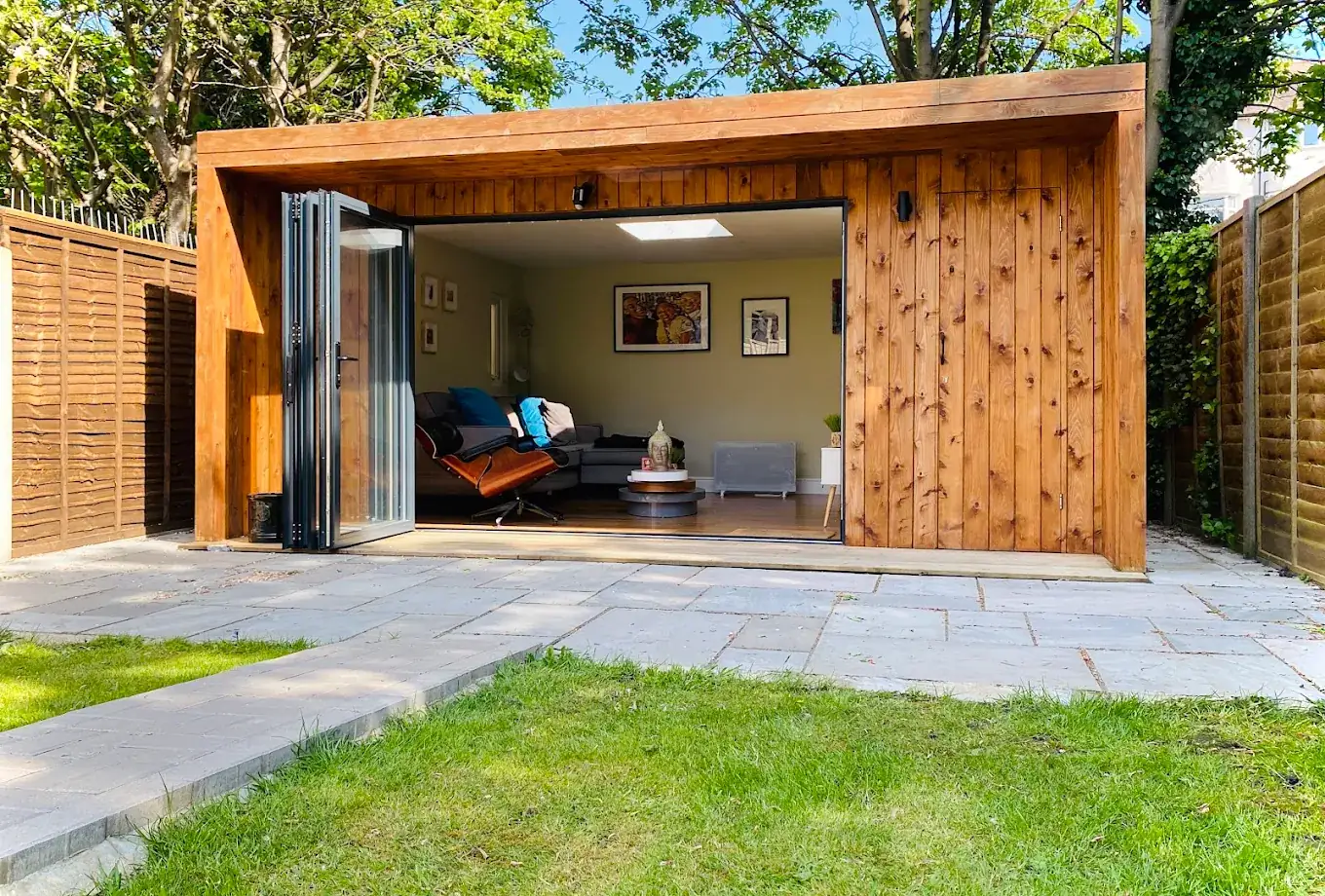
That's why so many of our rooms sit just under 2.5m tall: it keeps them within the limit for buildings close to a boundary, which is where most London garden rooms end up. If you want something taller or bigger, that's fine too. It just means an application, which we prepare for you.
The rules below are the national ones for England, set out in the Planning Portal's guidance on outbuildings. Your council can't make them stricter on its own, but it can restrict them in specific places, such as conservation areas or through an Article 4 direction. Those are covered further down.
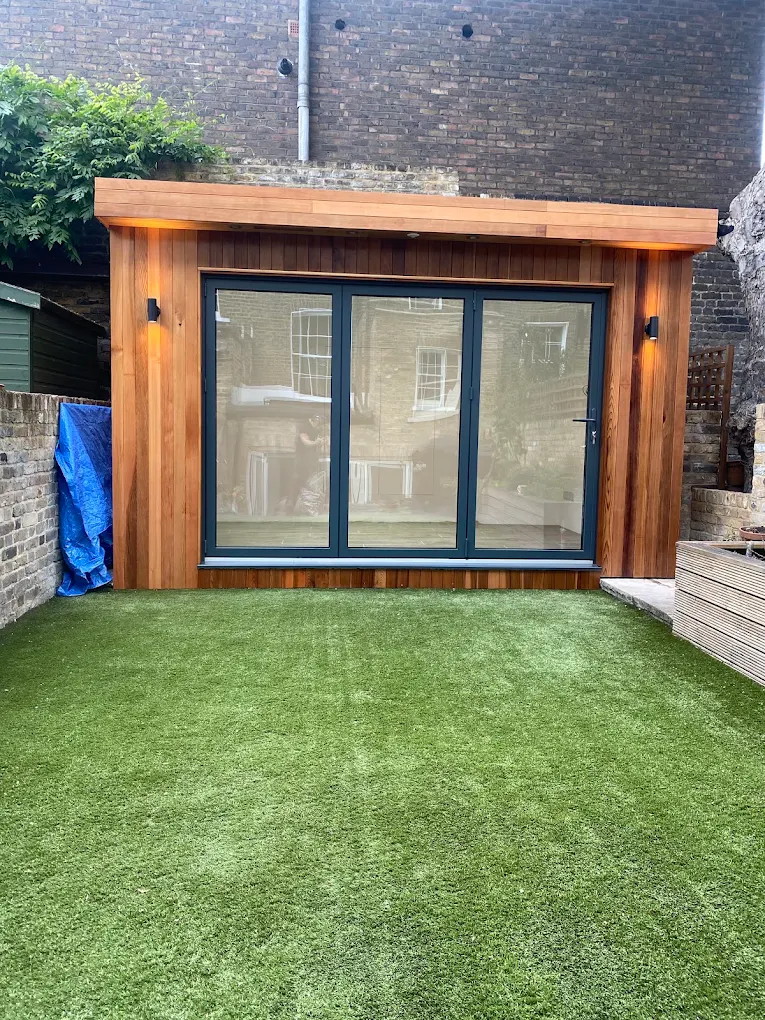
The six limits a garden room has to meet
Single storey
One storey only, with eaves no higher than 2.5m. No balconies, verandas or raised platforms over 0.3m high.
Height limits
No more than 2.5m tall if it sits within 2m of a boundary. Further from the boundary, up to 4m with a dual-pitched roof or 3m with any other roof.
Behind the house
Not forward of the front wall of the house (the principal elevation), which in practice means the back garden.
Half the garden
Together with any extensions and other outbuildings, it must not cover more than 50% of the land around the original house.
Used with the house
Its use must be incidental to the home: an office, studio, gym or occasional guest room. It can't be a separate, self-contained home.
A house, not a flat
Permitted development rights for outbuildings apply to houses. Flats and maisonettes don't have them, so a garden room needs an application.
These limits apply to the building's size and position, not its floor area. There is no fixed maximum number of square metres under permitted development, but building regulations (below) do change at 15m² and 30m².
When you do need planning permission
Listed buildings
Outbuildings within the grounds of a listed building are not permitted development, so you need planning permission (and possibly listed building consent).
Conservation areas
Conservation areas count as designated land: a garden room to the side of the house needs permission. London has hundreds of them, including Blackheath, Chislehurst and West Greenwich.
World Heritage Sites
On top of the side rule, buildings more than 20m from the house are limited to 10m² in total. In south-east London this affects homes in the Maritime Greenwich World Heritage Site.
Article 4 directions
Some councils remove permitted development rights on particular streets or estates. Your council can confirm whether one applies to your address.
Rights removed by condition
Many newer homes were approved with permitted development rights removed. It is worth checking the original planning permission for your house.
Self-contained annexes
A room with its own kitchen and bathroom that someone lives in independently is usually treated as a new dwelling, and needs permission.
If any of these apply, it doesn't mean you can't have a garden room. It means the design goes to the council first. We draw the plans, submit the application and deal with any questions from the planning officer.
Building regulations
Planning permission is about what a building looks like and where it sits. Building regulations are about how it's built: structure, fire safety and insulation. A room can be permitted development and still need building regulations approval, or the other way round.
Under 15m²
Normally no building regulations approval, as long as there is no sleeping accommodation.
15m² to 30m²
Normally exempt if there is no sleeping accommodation and the room is at least 1m from the boundary or built substantially of non-combustible materials.
Over 30m², or for sleeping
Needs building regulations approval. We handle the application and inspections as part of the build.
Planning in your borough
The national rules are the same everywhere, but every borough has its own conservation areas and local controls. We've written up what to look out for in the boroughs where we build most: garden rooms in Bromley, which has over 40 conservation areas including Chislehurst and parts of Petts Wood and Beckenham, and garden rooms in Greenwich, which has 23, plus the Maritime Greenwich World Heritage Site. For anywhere else, see the areas we cover or ask us to check your address.
Planning questions, answered
Do I need planning permission for a garden room?
Usually not. Most garden rooms are permitted development, as long as they stay single storey, sit behind the front of the house, keep to the height limits (2.5m if within 2m of a boundary) and, with other extensions and outbuildings, cover no more than half the garden. The main exceptions are flats, listed buildings, designated land such as conservation areas, and homes where permitted development rights have been removed.
How big can a garden room be without planning permission?
There is no fixed floor area under permitted development. The limits are height (2.5m within 2m of a boundary, otherwise 3m, or 4m with a dual-pitched roof), single storey, and not covering more than 50% of the land around the original house. Building regulations are a separate test, and they change at 15m² and 30m².
Can I sleep in a garden room?
A garden room used now and then as a guest room is generally treated as part of your home. Sleeping accommodation does bring it under building regulations, though, whatever its size. A fully self-contained annex with its own kitchen and bathroom, lived in independently, usually needs planning permission.
Do I need building regulations approval?
Normally not if the room is under 15m² with no sleeping accommodation. From 15m² to 30m² it's normally exempt if there's no sleeping accommodation and it's either at least 1m from the boundary or built substantially of non-combustible materials. Over 30m², approval is needed.
I live in a conservation area. Can I still build a garden room?
Yes, in most cases. In a conservation area a garden room to the side of the house needs planning permission, and some areas have extra local controls called Article 4 directions. A room at the back of the garden that meets the normal limits is often still permitted development. We check your address before designing anything.
Should I get a Lawful Development Certificate?
It's optional, but useful. It's a certificate from the council confirming the room is permitted development, which can help when you sell the house. We can prepare the drawings and application for you.
This guide covers England and reflects the Planning Portal's guidance as of October 2026. It is general information, not legal advice; your council has the final say on any specific property.
Ready to design your garden room?
Free, no-obligation design consultation, we'll talk you through what's possible for your space.
Get a Free Design Consultation